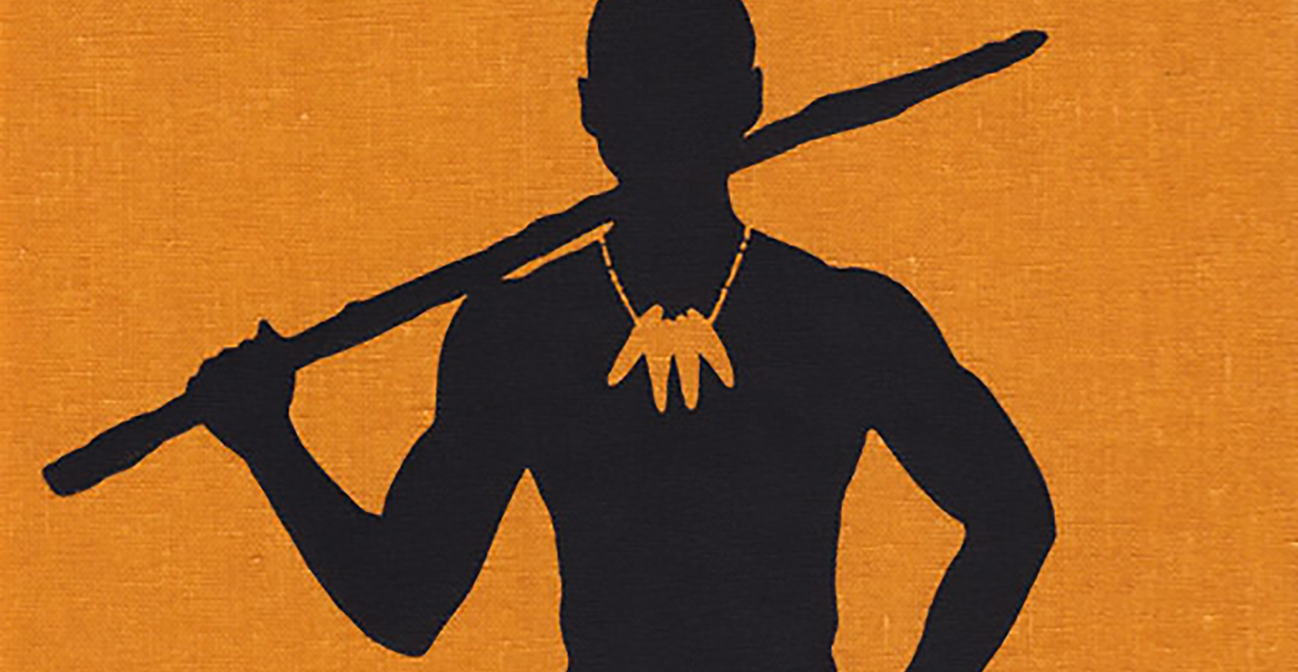
It is the end of seven years of exile for Okonkwo. His sin of accidental murder against a fellow villager forced him to flee from his home in Umuofia to his motherland, where he is kindly taken in by his uncle Uchendu.
True to character, Okonkwo once again starts from nothing (save for the fact that the closest thing he now has to a father-figure is not lazy) and builds himself a proper home and life once more. As his seven-year banishment nears its end, Okonkwo prepares a grand feast of thanksgiving for his in-laws before he departs for Umuofia. It is during this feast that Okonkwo says to Uchendu,
“‘I beg you to accept this little kola…It is not to pay you back for all you did for me in these seven years. A child cannot pay for its mother’s milk. I have only called you together because it is good for kinsman to meet'”
Things Fall Apart, pg. 166
Beautiful as it may be, Okonkwo’s citation of what I presume is an Igbo proverb is wildly out of character for him. Okonkwo is the exact kind of person who would try to repay his mother’s milk. He spent his entire life trying to repay the “debt” that his father accrued during his lifetime. His flawed opinion on justice, and consequently, returning a favor leads him to believe that everyone must be held accountable for each and every benefit they receive. Okonkwo has only ever been satisfied if he has achieved something by his own accord and his own accord only. It is for this reason that Okonkwo feels responsible for the sins of his father which are to him as a mother’s milk.
In this case then, why does Okonkwo cite this proverb when his actions and thoughts clearly dissent? It could be that Okonkwo is in fact attempting to repay his caretakers through this feast and says this adage through clenched teeth to ease stop any opposition he would have received. If Okonkwo’s in-laws felt that he could not properly repay them and refused the feast, Okonkwo would have felt indebted to them, a sentiment which surely would have destroyed him. It is also possible that Okonkwo has become a dynamic character in his seven years’ exile, and in doing so, begins to believe the proverb. However, that theory is probably incorrect, given that Okonkwo’s personality reverts to exactly what it was in Part 1 whenever he considers Nwoye’s conversion to Christianity.
“‘You have all seen the great abomination of your brother. Now he is no longer my son or your brother. I will only have a son who is a man…If any one of you prefers to be a woman, let him follow Nwoye now while I am alive so that I can curse him. If you turn against me while I am dead I will visit you and break your neck'”
Things Fall Apart, pg. 172
Here, I put myself in the narrative for the sake of simplicity. When asked to provide a proverb of my own choosing, I had initially considered a Biblical proverb. However, because of the incredible complexity and long discussion potential of my favorite Biblical proverbs, I resolved to save that for another time and pick a lesser known one from a man named Achaan Chaa. There are many translations of this story, but the most common goes like this:
“You see this goblet?” asks Achaan Chaa…”For me this glass is already broken. I enjoy it; I drink out of it. It holds my water admirably, sometimes even reflecting the sun in beautiful patterns. If I should tap it, it has a lovely ring to it. But when I put this glass on the shelf and the wind knocks it over or my elbow brushes it off the table and it falls to the ground and shatters, I say, ‘Of course.’ When I understand that the glass is already broken, every moment with it is precious.”
It is a mindset that I like to consider because it allows for personal growth even when things backfire terribly. Go ahead and call me a pessimist, and perhaps I am, from a certain point of view. But I like to think of myself as a realist, and that leads to the realization that nothing in this world lasts. Nothing good in this world can last, and nothing bad in this world can last. Following that premise to its logical conclusion leads to two equally valid outcomes:
1). Because it doesn’t last, there is an inexplicable beauty that is ascribed to it.
2). Because nothing in the world lasts, not everything deserves attention.
The first point is relatively straightforward. Enjoy every good thing while it lasts because that fact gives it beauty. When I recognize that I will be disappointed, I am not crippled when it is over. The second point, however, may require a bit more explanation. Recognizing the original premise also means that not everything is worth stressing over. I heard some advice from a SkyView teacher this past Friday, and they told me that the question they found themselves asking the most these days was, “Why does it matter?” Whenever something would happen to disappoint them, they ask themselves whether it is in fact worth distressing over. If it is relevant, they will find an appropriate means to solve the issue, just as any one of us would do. However, if something doesn’t truly matter in the grand scheme of things or is out of your hands, why bother fuming about it? When I choose to think selectively and spend my time on the people and things that matter most, I find that I am less prone to unnecessary stress or anger.
I hope that I articulated my point well and that it made sense, but if you disagree with me, I’d love to hear your thoughts on the matter. Also, please tell me about your thoughts on Okonkwo’s proverb earlier, I’d love the insight!
 Benjamin Mather's AP Literature Blog
I agree with the idea that Okonkwo did not exactly “repay a debt” because he is trying to put some people in his corner rather than be an outcast again. Basically, he is trying to reestablish his social status because that is all he ever wants in his life; to be more successful than his father and be the antithesis of his father. The Act of Communion is just important him to establish that connection with his motherland. I think he is just wearing a mask to show that he has changed, but he truly has not. His complaints about being there when others are not around show a lack of growth as a character.
The last bit of wondering why we put our energy in something that does not matter I think is very important to touch on. In Hamlet especially, he talks about how we are all going to become a worm’s meal, so why should we want to be of a higher class if it is not permanent in the whole life cycle of the universe. With the glass proverb, the glass is material. Like everything in life, it is replaceable, but the memories are not. Okonkwo is missing out on that meaning because he obviously cares about materials rather than memories. It shows how much he focuses on being the best rather than enjoying where you are and growing at the same time.
I kind of want to know which teacher that is because I like their advice. If it doesn’t matter in five years, why focus on it.
Very good first post Ben! You touched on some things that I did not necessarily think about and explained it really well!
LikeLiked by 1 person
Thanks for the reply! You’re connection between the glass proverb and Okonwko is one I hadn’t considered, and it definitely adds a different meaning. The teacher who gave me the advice was Mrs. West, by the way
LikeLike
What a well-written and thorough blog post to start off the new semester. I love how you examine Okonkwo’s notion of gift giving versus debt with your explanation of how he “would try to repay his mother’s milk. He spent his entire life trying to repay the ‘debt’ that his father accrued during his lifetime.” Okonkwo’s father-son conflict is critical to his development as a character and as a father himself. This conflict is also interesting to examine if you consider the role of the colonizer and the colonized. I also appreciate the proverb you shared and the wise teacher’s advice because it was something I really needed to hear today. Thanks for your thoughtful post, Ben.
LikeLike